
Kitchen Drains That Handle Daily Use
Garbage Disposal Services in Sioux Falls for units that jam frequently, leak from mounting seals, or fail to start when activated
A disposal unit that hums without grinding or leaks from the base flange signals mechanical failure or worn mounting components rather than a simple clog. Payton Plumbing installs, repairs, and replaces garbage disposals in Sioux Falls, addressing motor failures, jammed impellers, and deteriorated drain connections that cause leaks beneath the sink. When a disposal stops mid-cycle or drains slowly despite clearing the chamber, the problem typically involves improper drain pipe slope or a clog downstream in the P-trap rather than the disposal itself.
Disposal service includes diagnosing why units fail to operate, clearing jams without damaging impeller components, replacing worn mounting assemblies that leak at the sink flange, and installing new units when motor bearings fail or housings crack. Older disposals often lack overload protection, causing motors to burn out when hard objects jam the grinding ring, while modern units include reset buttons and reversible operation that reduce permanent damage from typical jams.
Arrange an evaluation to determine whether your disposal requires repair or replacement based on current operating condition.
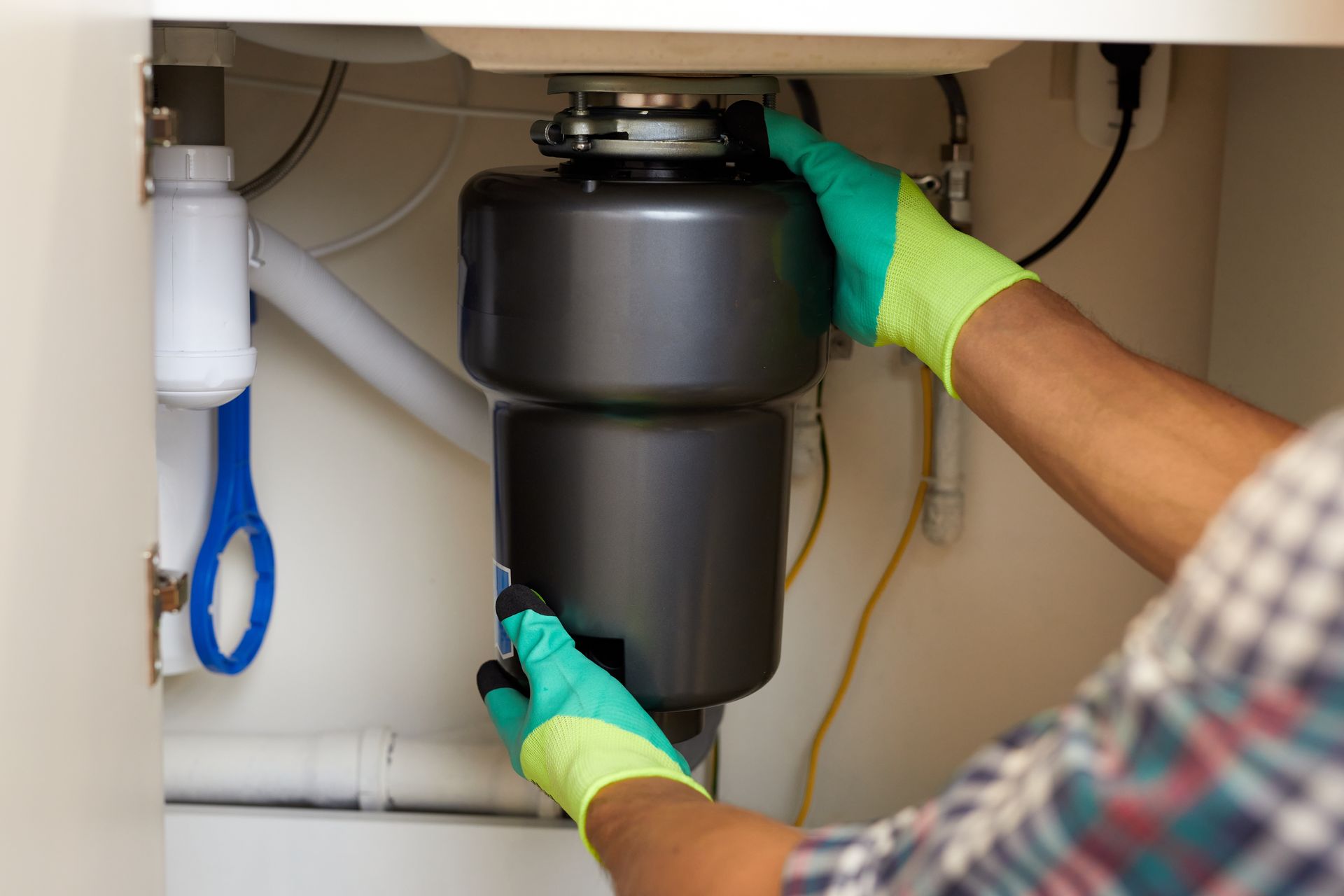
How Disposal Systems Address Kitchen Waste
Disposal operation depends on a spinning impeller plate that forces food waste against a stationary grinding ring, breaking material into particles small enough to flow through drain pipes, and this process requires adequate water flow during operation to carry waste through the P-trap. The unit mounts directly beneath the sink drain with a three-bolt mounting assembly that compresses a rubber gasket, and any gap in this seal allows water to leak during use.
After installation, you notice that the disposal starts immediately when switched, grinds typical food waste without jamming, and drains completely within seconds of shutoff without leaving standing water in the chamber. Properly sized disposals for your household usage pattern and correctly sloped drain connections prevent the frequent clogs and slow drainage that result from undersized units or improper installation.
Disposal selection involves matching horsepower to household size and usage frequency—half-horsepower units suit light use in smaller households, while three-quarter-horsepower models handle heavier loads without stalling—and ensuring that existing electrical circuits provide adequate power, since most disposals require a dedicated 15-amp circuit and wall switch installation if not already present.
Common Questions About This Service
Disposal installation and repair decisions involve understanding what causes common failures and when replacement makes more sense than ongoing repairs.
What causes disposals to leak at the mounting flange?
The rubber gasket between the sink drain and disposal mounting ring deteriorates over time from constant moisture exposure, and overtightening the mounting bolts during initial installation can compress the gasket unevenly, creating gaps where water seeps through during operation.
How do you clear a jammed disposal safely?
Most jams respond to inserting an Allen wrench into the hex socket on the disposal base and manually rotating the impeller plate in both directions to dislodge the obstruction, followed by removing the freed material from above and pressing the reset button before restoring power, which avoids disassembly in most cases.
When should disposals be replaced rather than repaired?
Motor failures, cracked housings, and severe internal corrosion warrant replacement since repair costs approach new unit prices, while jams, reset trips, and mounting leaks typically involve straightforward repairs that extend the unit's service life without major expense.
What items should not go into garbage disposals?
Fibrous materials like celery and corn husks wrap around impeller components, expanding pasta and rice absorb water and create clogs downstream, and hard items like bones and fruit pits can jam or damage grinding rings even in higher-horsepower units designed for heavier use.
How does Sioux Falls water quality affect disposal operation?
Hard water buildup inside the disposal chamber and drain connections gradually restricts flow, requiring periodic cleaning with ice cubes and coarse salt to scour interior surfaces, and mineral deposits in drain pipes below the disposal contribute to slow drainage that appears to be a disposal problem but actually involves the waste line.
Payton Plumbing addresses disposal problems with permanent solutions rather than temporary workarounds that leave underlying issues unresolved. Request garbage disposal assistance to restore full kitchen drain functionality.